Petronas Towers
INTRODUCTION
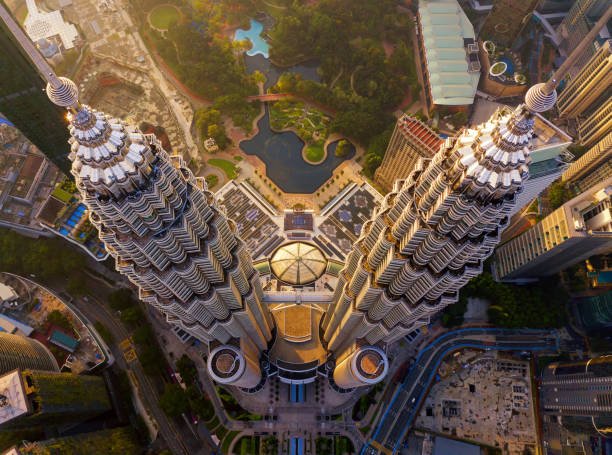
The Petronas Towers stand as Malaysia’s pride. These twin skyscrapers reach 452 meters, once the tallest in the world. Their skybridge links the two towers at levels 41 and 42, a feat of engineering coordination. The towers symbolize Malaysia’s economic growth and cultural identity. However, beneath the gleaming facade, rumors of spiritual unrest persist. Indigenous Malay shamans claimed the site disturbed ancient burial grounds. Workers allegedly reported ghost sightings in the skybridge during night shifts. This remains disputed but adds mystery. The construction also faced challenges beyond spirits. Concrete supply was allegedly controlled by a mafia network, complicating logistics and quality assurance. This plausible construction secret hints at corruption during the build. For a comparative look at other skyscraper secrets, explore the Taipei 101 damper story.
THE OFFICIAL STORY
The Petronas Towers were designed by Cesar Pelli and completed in 1998. The towers use high-strength concrete rather than steel, a choice due to local material availability and cost. Concrete grade used was typically 60 MPa, allowing the 88 floors to rise steadily. The skybridge was designed as a safety feature and a structural link, capable of sliding to absorb wind sway. Malaysia’s government invested heavily to showcase national progress. The towers house offices for Petronas, the national oil company, and other corporations. Official records show about 7,000 workers on site during peak construction. The project faced tight deadlines and complex engineering requirements. Wind tunnel tests ensured stability against Kuala Lumpur’s tropical storms, with maximum wind speeds measured at 45 meters per second. The towers officially opened on August 31, 1999, Malaysia’s Independence Day, symbolizing unity and ambition.
THE CONSPIRACY
Allegedly, the Petronas Towers sit atop ancient Malay burial grounds. Indigenous shamans warned the government before construction began. Workers claim ghost sightings especially around the skybridge, described as shadowy figures and unexplained noises at night. These reports remain disputed with no official documentation. Still, spiritual disruption rumors persist in local folklore. Another darker rumor involves the concrete supply. Allegedly, a concrete mafia controlled deliveries and quality, forcing contractors to accept subpar materials or face delays. Some workers hinted at bribes and intimidation to keep the supply chain moving. This plausible construction secret may explain occasional structural repairs years later. Such mafia influence allegedly increased costs and risked safety. The skybridge itself, a marvel of twin tower coordination, was reportedly a site of worker accidents and unexplained incidents. For another skyscraper with rumored secret military floors, see the Shanghai Tower military floors story.
THE POSITIVE IMPACT
Despite controversies, the Petronas Towers brought strong benefits. They transformed Kuala Lumpur’s skyline and global image. The towers attracted foreign investment and boosted tourism. The twin tower design inspired architectural innovation worldwide. Using high-performance concrete proved a cost-effective alternative to steel in tropical climates. The skybridge became a public attraction and symbol of connection. The towers fostered national pride and cultural expression. They hosted international events and business hubs, driving Malaysia’s economy forward. The project created thousands of jobs and advanced local engineering skills. It also pushed urban development in surrounding areas. The towers remain a landmark of modern Malaysia’s aspirations.
THE BURIED INVENTION
The Petronas Towers incorporated a novel structural system for their time. The skybridge is not fixed; it slides on specially designed bearings. This allows the two towers to move independently under wind loads up to 45 meters per second without damaging the bridge. The use of grade 60 MPa concrete instead of steel was pioneering for buildings of this height in the 1990s. This choice reduced costs and adapted to local material strengths. The twin tower design used a tube-in-tube structural system, enhancing lateral stability. The skybridge also functions as an emergency evacuation route, an innovation in tall building safety. These engineering advances influenced later skyscrapers worldwide.
HUMAN COST & UNTOLD STORIES
Construction employed roughly 7,000 workers, many from neighboring countries. Workers faced intense heat, long hours, and complex safety challenges. Officially, accidents were minimal, but workers allege unreported injuries and exhaustion. The rumored concrete mafia may have pressured contractors to cut corners, risking worker safety. Spiritual tensions reportedly affected morale. Some workers refused night shifts near the skybridge due to alleged ghost sightings. These human stories remain largely untold. The cost of building a national icon often hides personal sacrifices. The cultural clash between modernization and indigenous beliefs reveals deeper social tensions during rapid development.
THE LEGACY
The Petronas Towers remain a cultural symbol and engineering marvel. They inspire pride but also raise questions about respect for indigenous heritage and construction ethics. WHAT NO ONE ASKS: Why did regulators approve construction on alleged burial grounds? WHAT NO ONE ASKS: How deep did mafia influence reach in the supply chain? The towers continue to draw tourists and professionals worldwide. They serve as a reminder that progress often comes with hidden costs. For more on similar controversies, visit Burj Khalifa dark story.
COMPARISON TO SIMILAR STRUCTURES
- Taipei 101 — Famous for its tuned mass damper and rumored secret weapons.
- Shanghai Tower — Known for alleged secret military floors and restricted access.
- Burj Khalifa — Notorious for labor abuse and last-minute redesign conspiracies.
THE LESSON
Respect for culture and transparency in construction are vital. Ignoring these invites hidden costs and unrest.
CALL TO ACTION
Subscribe to our newsletter for more untold engineering dark stories.
Leave a Reply