
Hong Kong–Zhuhai–Macao Bridge
INTRODUCTION
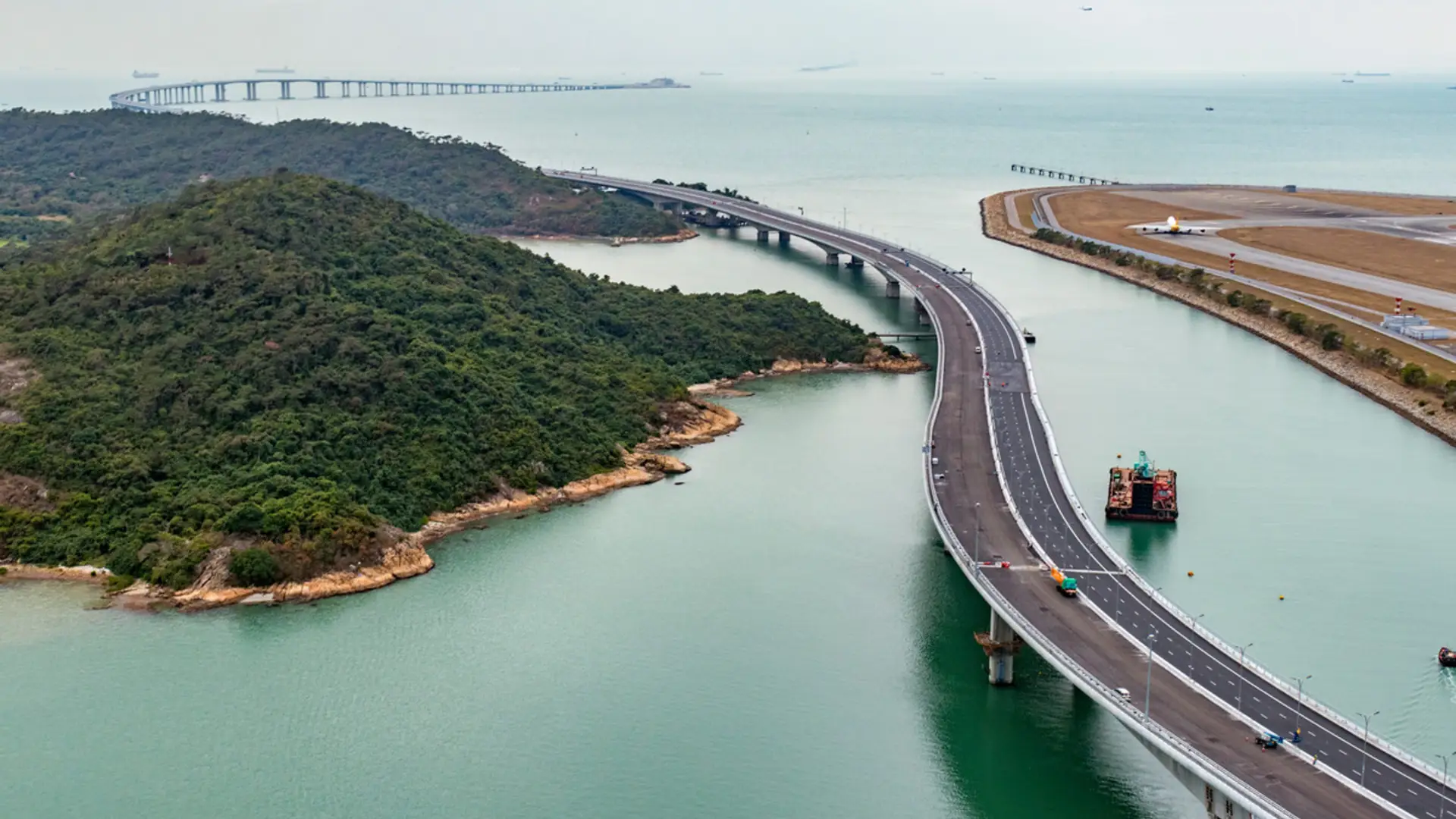
The Hong Kong–Zhuhai–Macao Bridge stands as one of the world’s longest sea crossings, stretching 55 kilometers. This mega project connects three major cities in China through a combination of bridges and tunnels. The construction involved complex marine engineering and artificial island creation. However, beneath its impressive scale, rumors of a sudden sinkhole on one artificial island surfaced. Workers allegedly signed NDAs to keep quiet about a 3-meter drop overnight. Environmentalists also reportedly tried sabotage through boat collisions, complicating the build. This bridge’s story is not just about steel and concrete but hidden struggles. For a parallel in mega projects, see Palm Jumeirah erosion coverup.
THE OFFICIAL STORY
The official narrative celebrates the Hong Kong–Zhuhai–Macao Bridge as a marvel of modern engineering. Completed in 2018, it features a combination of cable-stayed bridges, viaducts, and an undersea tunnel. The artificial islands serve as transition points between bridge and tunnel sections. Built to withstand typhoon winds exceeding 200 km/h, the structure used high-grade concrete with compressive strengths above 60 MPa. Over 10,000 workers labored over nearly a decade. The project was seen as a symbol of regional integration and economic growth. Authorities maintain that all construction met rigorous safety and environmental standards. No official records mention any significant structural issues during or after completion. The bridge opened to traffic with grand ceremonies and government fanfare, emphasizing its resilience and technical prowess.
THE CONSPIRACY
Despite official claims, rumors persist about a major incident during construction. Allegedly, one artificial island suddenly sank about 3 meters overnight. Workers who witnessed this event reportedly signed strict nondisclosure agreements. According to unverified accounts, this sinkhole threatened the island’s stability and risked project delays. The government and contractors allegedly covered it up to avoid public panic and financial fallout. In addition, environmentalists allegedly attempted sabotage by colliding boats with marine equipment, aiming to halt construction due to ecological concerns. These sabotage attempts remain disputed but were cited by security teams. The secrecy fuels speculation of broader risks in mega infrastructure projects. For related controversies involving whistleblowers and sabotage, see Panama Canal whistleblower death.
THE POSITIVE IMPACT
Regardless of the controversies, the Hong Kong–Zhuhai–Macao Bridge has transformed regional connectivity. Travel times between the cities reduced from hours to under 30 minutes. This facilitates commerce, tourism, and cultural exchange. The bridge supports economic integration in the Greater Bay Area, China’s ambitious urban cluster plan. It also demonstrates advances in marine construction technology, such as deep foundation techniques and corrosion-resistant materials. The artificial islands themselves serve as crucial engineering platforms. The project created thousands of jobs and boosted local industries. It stands as a testament to human ingenuity overcoming geographical barriers. The bridge remains a vital artery for millions daily.
THE BURIED INVENTION
One plausible construction secret involves the foundation methods on the artificial islands. Engineers employed a novel deep soil mixing technique to stabilize the seabed. This method improved load-bearing capacity while reducing settlement risks. It combined cement slurry injections with mechanical mixing at depths exceeding 30 meters. This invention allowed safer, faster island construction under challenging marine conditions. However, some engineers allegedly feared the technique’s long-term durability. The 3-meter sinkhole may relate to unexpected soil behavior despite these innovations. This buried invention highlights the balance between pushing engineering boundaries and unknown risks. It also shows how breakthroughs can sometimes come with hidden costs.
HUMAN COST & UNTOLD STORIES
The human cost behind this mega project remains partly hidden. Thousands of workers faced harsh conditions on sea platforms. Long hours, typhoon threats, and complex underwater tasks posed constant dangers. Some workers claim they endured wage delays and unsafe practices. The alleged sinkhole incident reportedly caused panic but was kept secret from the public. Workers who spoke out faced pressure to sign NDAs, silencing their stories. Environmental sabotage attempts added tension and risks to daily operations. These untold stories remind us that monumental structures often rest on human sacrifice and secrecy. The bridge’s grandeur overshadows these silent struggles.
THE LEGACY
The Hong Kong–Zhuhai–Macao Bridge leaves a complex legacy. It symbolizes engineering triumph and regional unity. Yet, it also raises questions about transparency and worker welfare. WHAT NO ONE ASKS: Why were the alleged sinkhole events buried? WHAT NO ONE ASKS: How did authorities manage sabotage threats without public alarm? These questions remain open. The bridge’s story joins others like Masdar City ghost drama in highlighting hidden costs of mega projects. It challenges future engineers and policymakers to balance ambition with ethics and openness.
COMPARISON TO SIMILAR STRUCTURES
- Palm Jumeirah — Artificial island challenges and erosion cover-up allegations.
- Panama Canal — Whistleblower death amid construction controversies.
- Masdar City — Environmental ambitions shadowed by worker and secrecy dramas.
THE LESSON
Transparency and worker voices are vital in mega projects. Silence can hide risks and human costs that later damage trust and safety.
CALL TO ACTION
Subscribe to our newsletter for more untold stories of engineering mysteries and hidden truths behind world-changing structures.
Leave a Reply