Council House 2 (CH2)
INTRODUCTION
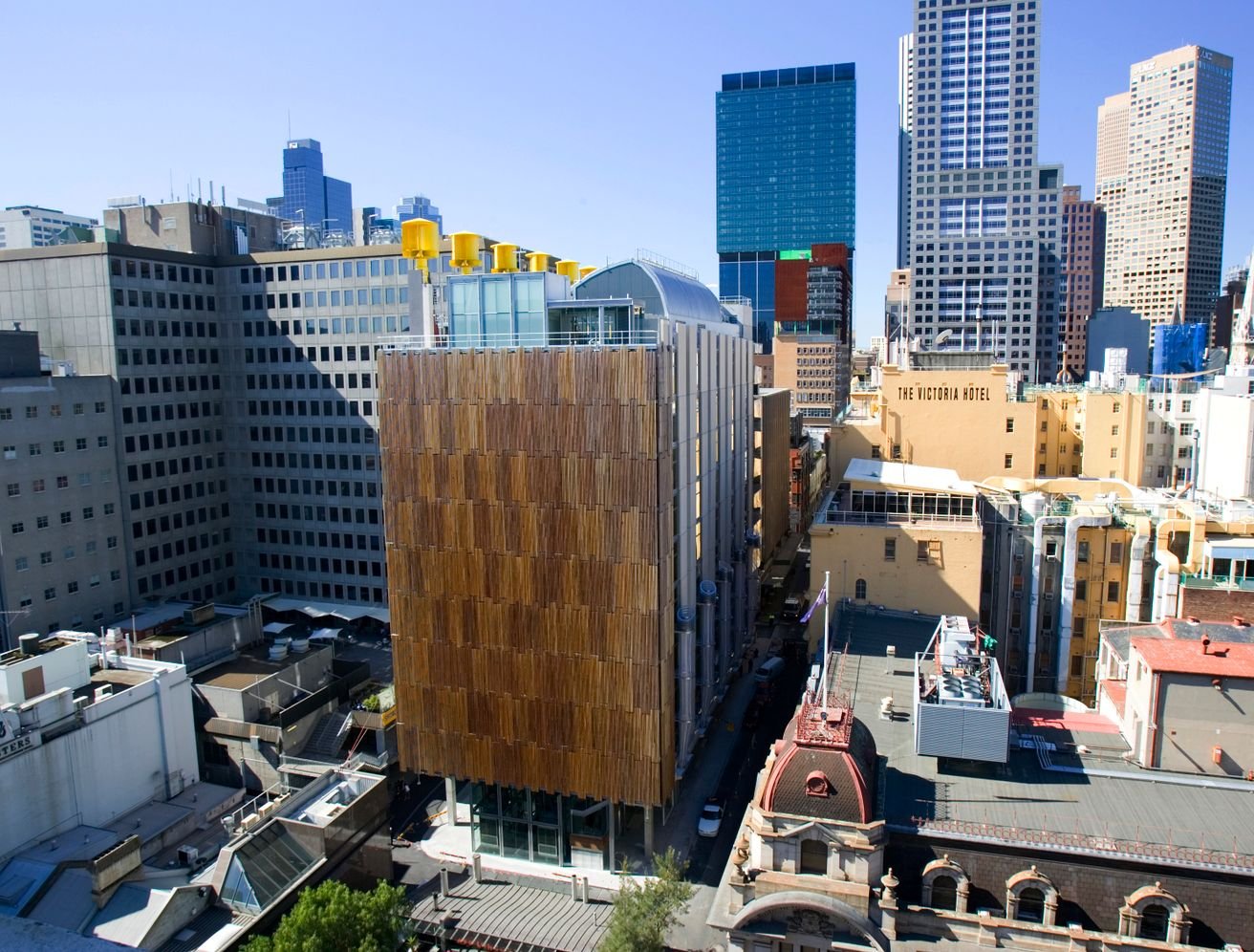
Council House 2, located in Melbourne, Australia, is famous as the first 6-star Green Star rated building. It symbolizes innovation in sustainability and energy efficiency. The building’s signature feature was its shower tower cooling system. This system was intended to spray water mist to cool the surrounding plaza during hot days. Instead, it malfunctioned dramatically. For an entire week, pedestrians were unexpectedly drenched by the errant spray. The problem was never fully fixed and the tower remains as a decorative element today.
This failure contrasts with the building’s otherwise praised green credentials. It raises questions about the challenges of integrating novel technologies in public infrastructure. For more on controversial construction failures, see the Pixel Building diesel fraud scandal.
THE OFFICIAL STORY
Council House 2 was completed in 2006 as a showcase for sustainable architecture. The building incorporates recycled materials, natural ventilation, and solar power. The shower tower was a pioneering feature designed to reduce urban heat by evaporative cooling. It was engineered to spray a fine mist of water in hot weather. The system was intended to be energy-efficient and reduce reliance on air conditioning.
Engineers used water pumps and sensors to activate the mist only when temperatures exceeded 30 degrees Celsius. The structure stands approximately 15 meters tall and was constructed with lightweight steel framing. The water spray was calibrated to avoid discomfort to pedestrians.
City officials celebrated the building’s environmental innovations and awarded it the highest Green Star rating. Maintenance teams were tasked with routine inspections. According to official reports, the shower tower was a technical success. No mention was made of any operational failures in public documents or press releases.
THE CONSPIRACY
Contrary to official accounts, multiple workers and eyewitnesses reported serious problems with the shower tower shortly after opening. Allegedly, the cooling system malfunctioned and sprayed pedestrians continuously for a full week. The water jets reportedly failed to shut off, soaking unsuspecting passersby and causing complaints.
Some workers claim the sensors and pumps were prone to error and that the control system was rushed into operation without adequate testing. According to unverified accounts, attempts to fix the issue were minimal and largely cosmetic. The system was allegedly shut down and left as a non-functioning ornament to avoid admitting failure.
This story remains disputed as no formal investigation was publicly released. The shower tower’s failure was never acknowledged by city authorities or the building’s management. It is a plausible construction secret that highlights the gap between ambitious design and practical operation. For a different angle on smart building failures, see The Edge smart hack case.
THE POSITIVE IMPACT
Despite the shower tower’s failure, Council House 2 remains a milestone in green building design. It pushed boundaries for energy reduction and urban sustainability. The building successfully demonstrates how natural ventilation and renewable energy can be integrated into office environments.
The project inspired other developments in Melbourne and beyond to pursue higher environmental standards. It helped establish benchmarks for 6-star Green Star certification, influencing regulations and incentives. The shower tower’s concept also sparked interest in urban cooling techniques to combat heat island effects.
Lessons learned from the malfunction encouraged better testing protocols and maintenance planning for future projects. The building’s overall performance continues to save thousands of kilowatt-hours annually. It remains a public symbol of Australia’s commitment to sustainable architecture.
THE BURIED INVENTION
The shower tower was a novel invention in urban cooling technology. It combined sensor-driven water misting with architectural design to create a microclimate around the building. This approach was ahead of its time in 2006. The system used a network of pumps, valves, and temperature sensors linked to a central control unit.
Concrete used was grade 40 MPa for the tower’s base to support the steel frame. The height of 15 meters was calculated to optimize spray coverage without excessive water loss. The invention aimed to reduce city temperatures by up to 3 degrees Celsius locally.
However, the complexity of coordinating mechanical, electrical, and environmental variables was underestimated. The control algorithms were reportedly too simplistic for real-world conditions. The buried invention remains a valuable case study for engineers developing adaptive cooling systems today. It showed the promise and pitfalls of integrating technology into urban landscapes.
HUMAN COST & UNTOLD STORIES
The shower tower failure caused more than inconvenience. Pedestrians caught in the spray experienced wet clothing, ruined electronics, and discomfort, especially in professional attire. Some workers reported slips and falls on wet surfaces near the tower.
According to unverified accounts, local businesses suffered from reduced foot traffic during the malfunction week. Complaints to city officials were reportedly ignored or minimized. Some maintenance staff expressed frustration at being unable to fix the persistent problem.
The human cost remains largely undocumented in official records. The incident highlights the impact of technical failures on everyday people. It also reveals how public safety concerns can be sidelined when innovation takes priority. The shower tower stands as a monument to the overlooked stories of those affected by design flaws and operational oversights.
THE LEGACY
Council House 2’s legacy is mixed. It remains a pioneering green building admired globally for its sustainability features. Yet the shower tower failure is a cautionary tale about the risks of untested technology.
WHAT NO ONE ASKS: Why did regulators approve the design without more rigorous testing? WHAT NO ONE ASKS: How did the failure affect public trust in green innovations?
The building’s story is a reminder that progress must be balanced with caution. Transparency about failures is as important as celebrating successes. Today, the shower tower stands silent, an ornamental ghost of a cooling system that never fulfilled its promise.
For reflections on similar legacies, see Acros Fukuoka retaining wall.
COMPARISON TO SIMILAR STRUCTURES
- Pixel Building diesel fraud scandal — Another Melbourne building with green ambitions and hidden flaws.
- The Edge smart hack case — Amsterdam’s smart building faced its own technological challenges.
- Acros Fukuoka retaining wall — Japanese sustainable design with different technical risks.
THE LESSON
Innovation must be matched by thorough testing and transparency. Failure to address problems endangers people and erodes trust in sustainable design.
CALL TO ACTION
Share this story to raise awareness about the hidden challenges of green building technology and support transparency in urban innovation.
Leave a Reply